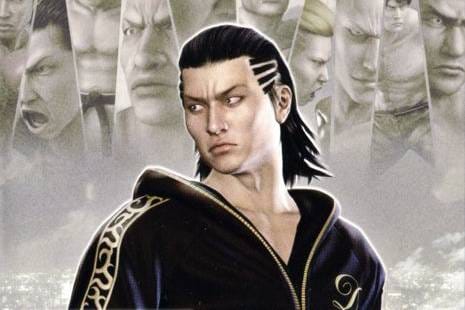

Developed/Published by: Sega CS3, Syn Sophia / Sega
Released: 22/09/2010
Completed: 25/04/2026
Completion: Completed it and the majority of the side stories. I even found all the cats.
Probably about halfway through playing Kurohyō: Ryū ga Gotoku Shinshō (translated as “Black Panther: Like A Dragon New Chapter”) I thought a funny gimmick for when I wrote it up would be I’d make, like, a pretend YouTube thumbnail where I’ve got a completely exaggerated shocked face and the title was something like “THE SECRET BEST YAKUZA GAME CAME OUT ON PSP???” but, and I’m sorry if this is going to render the rest of the article moot, by the end of the game I felt like a more accurate thumbnail would be one where I was giving an exaggerated sigh and the title was something like “WHY ARE YAKUZA GAME PLOTS ALWAYS CONFUSING AND OVERCOMPLICATED???”
I feel like if I was A/B testing them the first one would probably do better, and it’s not completely unwarranted. Because Kurohyō is genuinely great–certainly better than Yakuza 4, anyway.
Kurohyō: Ryū ga Gotoku Shinshō, which I’ll just refer to as Kurohyō, is not the first spin-off of the Yakuza franchise1 (that would be Ryū ga Gotoku Kenzan!) but it’s the first on handhelds and the first to be set in the contemporary version of Yakuza’s Kamurocho setting. Never officially translated–because it had the misfortune to be released in the twilight of the PSP and in the era where Yakuza was still scraping along at its lowest popularity–in 2026 you can play it thanks to the efforts of TeamK4L who (so far) have translated almost the entire game outside of the non-story required hostesses (which, let’s be honest, are only for the absolutely maniacal completionists, here especially for reasons I’ll describe.) The translation isn’t perfect–there are more than a few awkward points, misspellings and grammatical errors–but it’s more than good enough. Indeed, as someone who hasn’t really messed around with emulating more modern systems [“20 year old systems? Modern?”–Ed.] it feels like a near miracle to be playing a close-to-professional translation of a PSP game on Steam Deck that otherwise I’d simply own a disc copy of and glance at every once in a while before going back to slogging through Japanese grammar drills.

Kurohyō is set in 2010, just after Yakuza 42, though there’s ultimately no connection to the main franchise (I was surprised by this, in our current era of endless franchise interconnectivity; if there are any cameos, I didn’t notice them). The player takes the role of Tatsuya Ukyo, a juvenile delinquent who is scrabbling for survival in Kamurocho and–angry about his lot in life–pushing everyone in his life away and on a path of self-destruction. The only thing he has going for himself is his fighting ability, and it’s ultimately that which sets the gears of the plot in motion–accidentally killing a Tojo Clan member when trying to shake down a loan shark, Tatsuya finds himself in debt to the Kuki Family, and forced to fight in the “Dragon Heat” underground fighting tournament3 with the promise that if he can win ten matches in a row he will earn his freedom.
This is a great setup for a story in the Yakuzaverse, and even only four games into the franchise it feels so refreshing to step away from Kazuma Kiryu and his entanglements. It’s also refreshing to not have a game where the protagonist and everyone around him, despite being literal criminals are not the nicest, most honourable, best men to ever live, but flawed, angry and honestly sort of shitty dudes. Tatsuya suuucks. He’s angry, rude, and ignorant, and the people around him aren’t any better.4
It sets up a genuinely meaningful narrative: Can Tatsuya, in this horrible situation, pushed to the brink, learn and grow, because it’s obvious he wasn’t going to be able to go on the way that he was?
I would say for a big chunk of the game this really works. Every chapter ends with a climactic MMA battle that’s been foreshadowed and which has a meaningful part to play in the plot. But there’s an issue with that structure, and it’s one that video games have a real issue dealing with: how do you tell an underdog story when you have to win all the time?
The fact is, we all hate scheduled losses in video games, and they’re always handled in some stupid way. You lose control. The enemy can go down to 1 HP but no lower. The enemy health bar is literally impossible (I just complained about this kind of thing in Promise Mascot Agency.)
It’s really hard to grow if you’re winning all the time. It’s not something I blame for Kurohyō’s plot ultimately tying itself in knots–most of that’s all the usual Yakuza infighting–but it doesn’t help, as they have to lay a lot of extra stuff on to make sure that Tatsuya really “loses” when he’s winning. But when the game stays close to his emotional journey, it does work.

The real vibe killer is that towards the end of the game the story is so complicated that the cut-scenes seem to go on forever. This is really strange for what is ostensibly a portable game. I assumed that in the style of other portable instalments of franchises–lets say, like Crisis Core: Final Fantasy VII–the game was set around a tournament to try and make the game a bit more suitable to quick pick-up-and-play sessions, but it’s pretty much a normal Yakuza game, just on PSP5. The cut-scenes are done in a motion comic style that I have to admit I found pretty repetitive, and there are sections of the game where it feels like you’re just running between motion comics, each of which feels like they’re about twenty minutes long (I didn’t time them; they very well may be).
This really sapped my will to see this through to the end, which is such a bummer because it starts so strong. If you’re a fan of the PS2 originals–and I am–returning to that low res version of Kamurocho is such a pleasure, with your imagination filling in the gaps, and co-developed with Syn Sophia the game features a more in-depth fighting system than we’ve seen in the franchise to this point. Lifting animations and fighting styles from Def Jam: Fight for NY (or likely directly from Def Jam: Fight for NY – The Takeover, the PSP installment) which was previously developed by Syn Sophia as AKI Corporation, Kurohyō is much more focused on one-on-one battles with high/low attacks, grabs, counters, and a serious number of different fighting styles that can be learned and upgraded across the game. Unlike the Yakuza games so far–where fighting can be quite rote–this keeps fighting interesting as you try and level up each fighting style and deal with its quirks, and to try and use the “right” fighting style to counter your opponents when needed.
Surprisingly, one of the very best fights in the game is the first, which is a raw skill check battle, because it so clearly communicates the stakes. Tatsuya isn’t challenged by any of the usual goons on the streets of Kamurocho, but when faced with a real fighter, you get your arse kicked. You’re likely to only barely survive it, and it feels worth the effort of many restarts, because it’s true to the story. It’s a rare game that can pay off mechanically like that, and it’s simply a shame that as you get stronger (and load up on equipment and healing items) the battles stop feeling quite the same–perhaps until the very final tournament battle, which is a monster.
If the game has stopped there, I would have been more than satisfied, but Sega just can’t help but overegg their Yakuza puddings. They want all of the threads to come together to make the final battles an epic conclusion, but when Tatsuya’s emotional journey is essentially concluded… it’s unnecessary. Everything beyond that is just the usual Yakuza cruft.
In terms of the good Yakuza cruft, though, there’s plenty of that here too. There are tons of side-quests, and a lot of them feature their own threads that are tied into the game’s general themes. Sure, they’re mostly just “go there, beat up this dude” but the game’s wide variety of fighting styles keeps it engaging. There’s the usual bowling, batting cages, claw machines, and even the full hostess experience. I alluded earlier that the hostesses are only for the true maniacs here, and it’s because Kurohyō makes a particular decision to make money far more scarce than it is in the mainline Yakuza. As a result they’ve added new part-time jobs to the game too.

The scarcity of money, however, is a slight cheat because after a point the main way they keep your money constrained is that levelling up and buying new special moves costs a pretty ridiculous amount of cash. This means that you’re simply not going to want to spend money on doing things that aren’t really useful–like hostesses–and in fact the decision to make both levelling up and new special moves cost money works at cross purposes because at least I personally never ever bought new special moves, believing that another point in punch or kick was simply worth more.
However, the scarcity is, I think, better than the alternative, because it does make you want to engage with more systems. I never bother gambling in other Yakuza games, but here it’s worth popping into the casino with any of the “cheat” items you’ve found to raise extra cash. I think I’d prefer if they’d simply tried to keep the money you earn low without having an obvious money sink to force it–there aren’t many good ways to raise crazy money here anyway (even gambling has low limits and multipliers.)
Even if it outstays its welcome–and you could possibly argue that at least partially it outstays its welcome because like the other Yakuza games, it’s so hard to not just keep doing side quests and the other bits and bobs rather than rolling through the story at a good pace–Kurohyō is a great game and a great entry in the franchise. It deserves to be played by more people and it’s very odd–in a series that’s now lousy with remakes–that it hasn’t seen a remake. That said, after running Yakuza 3 into the ground with horrible recasts (Rikiya… look how they massacred my boy…) I’d really rather they didn’t touch this one, and instead people enjoyed it thanks to the great work of TeamK4L and those kings among men: emulator devs. In fact, if you’re interested, TeamK4L are actively working on a 2.0 version of their language patch and you might want to wait for it as it’ll iron out the small issues I had with the current version. No telling how long it will take, and the current version is perfectly acceptable, so if you can’t wait, get fired in.
Will I ever play these again? I’m already excited to play the sequel. Though surprisingly that’s not next on the chronological Yakuza list.
Final Thought: I didn’t notice until long after I’d finished this that Kurohyō was actually accompanied by a TV drama based on it, and I’m interested to find out if the story is any smoother in a different format. However, unlike the game, it seems the series has never been given a particularly good English translation, so I guess that’s what I can pine for while crunching through Kanji lessons and the like.
- I’m remembering now that they’ve changed the name of the franchise to “Like A Dragon” internationally, but I don’t feel like it’s really stuck, or at least, hasn’t stuck retroactively, so I’m not going to use it, because it does feel a bit like if I referred to the Ghosts n’ Goblins franchise as the Demon World Village franchise. ↩︎
- Something I hadn’t noticed before is that the Yakuza games are intentionally set at the time of their release–so Yakuza 3 was released at the end of Feb 2009, and is set in March 2009, Yakuza 4 in March 2010, and so on. It’s a cute detail. ↩︎
- This is different from, and unrelated to, the Coliseum in Purgatory. And later in the game Tatsuya will find a side quest that’s another fighting tournament in Kamurocho. People love watching dudes beat the hell out of each other in Kamurocho, and it’s already happening on every street corner anyway! ↩︎
- Obviously a lot of characters are going to have exculpatory reasons why they’re behaving that way that are revealed later. It’s a Yakuza game after all. ↩︎
- In fact, there are certain things that make the game even less suitable to short bursts, like the removal of the taxi ranks. You’d think that they’d maybe want you to be able to jump between side quests quickly–maybe add, I don’t know, those stupid touristy rickshaws that you see a lot of places (if not in Japan, to my memory) so you can jump between spots on the map even quicker. But no, none of that, run between places and get into a lot of random fights instead and then if you’ve only got a few minutes not actually get to do the thing you were trying to do. ↩︎